Optimal Soundstage
Room mapping creates an ideal audio environment, ensuring every listener experiences balanced sound, enhanced clarity and richness, and a fully immersive auditory experience onboard.

Precision acoustic engineering
Phase-coherent. Evenly covered.
Consistent in every seat.
Engineered consistency in every seat
Room Mapping is not about making one position sound impressive. It is about achieving phase cohesion, even coverage across the frequency response and consistent volume throughout the listening environment.
Using precision measurement equipment and advanced DSP optimisation, we analyse multiple seating positions to create a balanced, natural listening experience wherever you sit.
WHY ROOM MAPPING MATTERS
Room mapping creates an ideal audio environment, ensuring every listener experiences balanced sound, enhanced clarity and richness, and a fully immersive auditory experience onboard.
Effective room mapping identifies and addresses acoustic challenges, minimising unwanted echoes and distortions so the audio system can realise its full potential.
The calibration process
Capture high-resolution acoustic data across every relevant seating position.
Identify phase, frequency and level variations throughout the listening area.
Design precise DSP filters around the room, loudspeakers and intended use.
Re-measure the finished system and confirm consistent real-world performance.
The science behind the sound
Surfaces, furnishings, speaker placement and seating position all change what reaches the listener. Mapping the complete room reveals where energy builds, where it disappears and how every source interacts.
What room mapping delivers
The objective is not simply louder or brighter sound. It is predictable, repeatable performance across the room, with each loudspeaker contributing as part of one coherent system.
Drivers and loudspeakers arrive in time, creating a stable, focused soundstage.
Consistent tonal balance without excessive peaks, dips or disconnected bass.
Filters are designed from measurements taken throughout the usable seating area.
Controlled volume distribution reduces hot spots and weak areas across the room.
Visualising performance
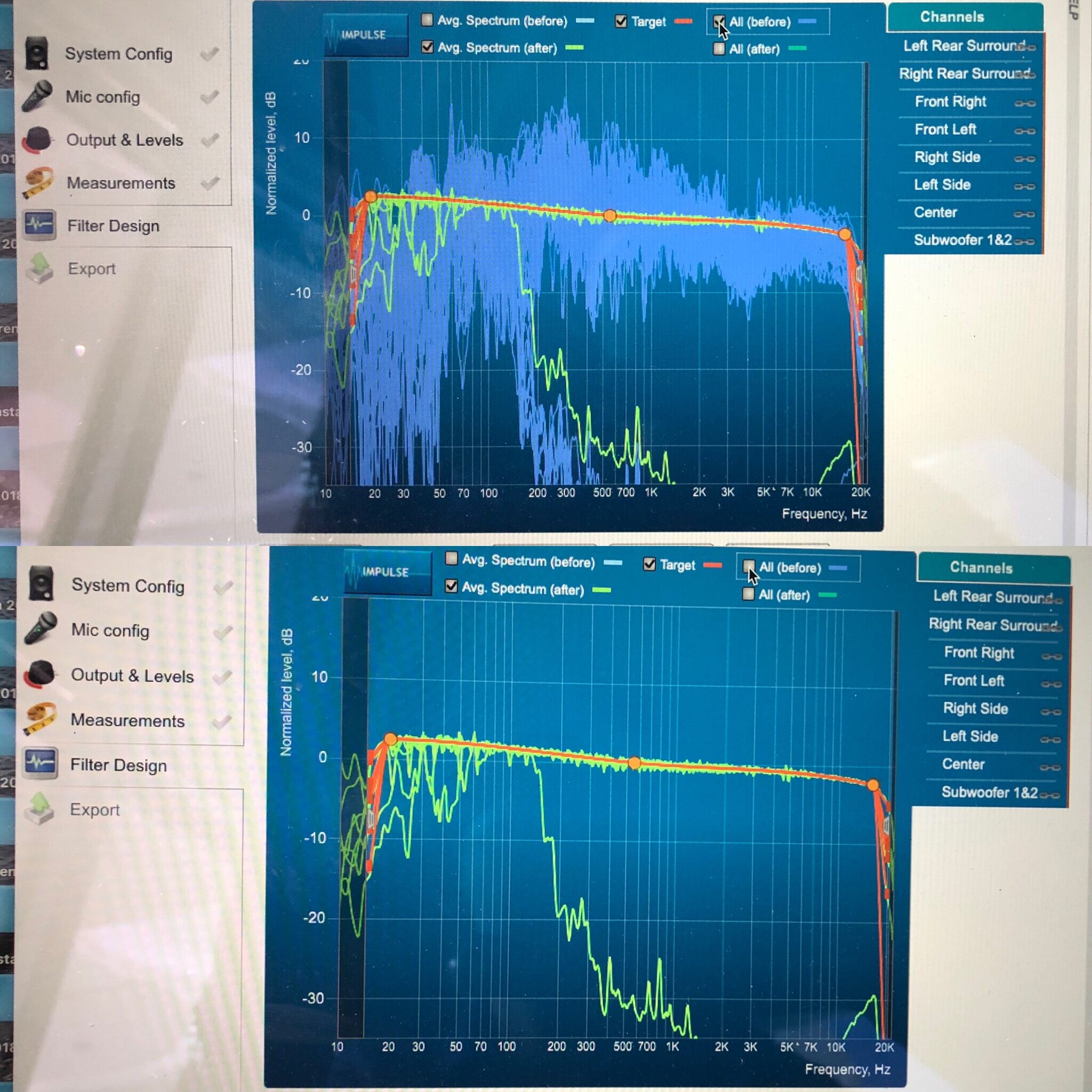
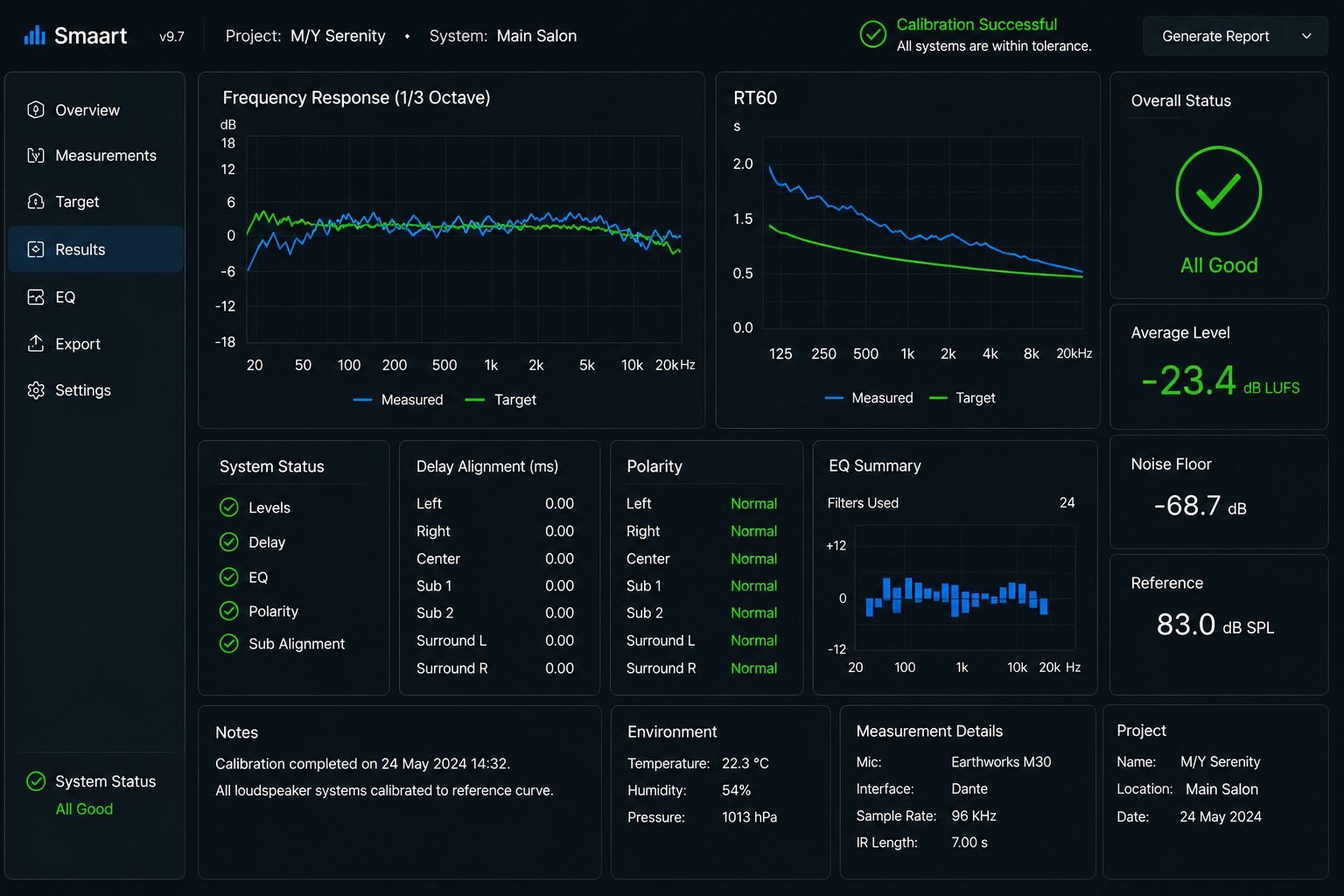
Response plots and spatial measurements turn acoustic behaviour into usable engineering data. They show the difference between isolated listening tests and a system designed for consistent coverage.
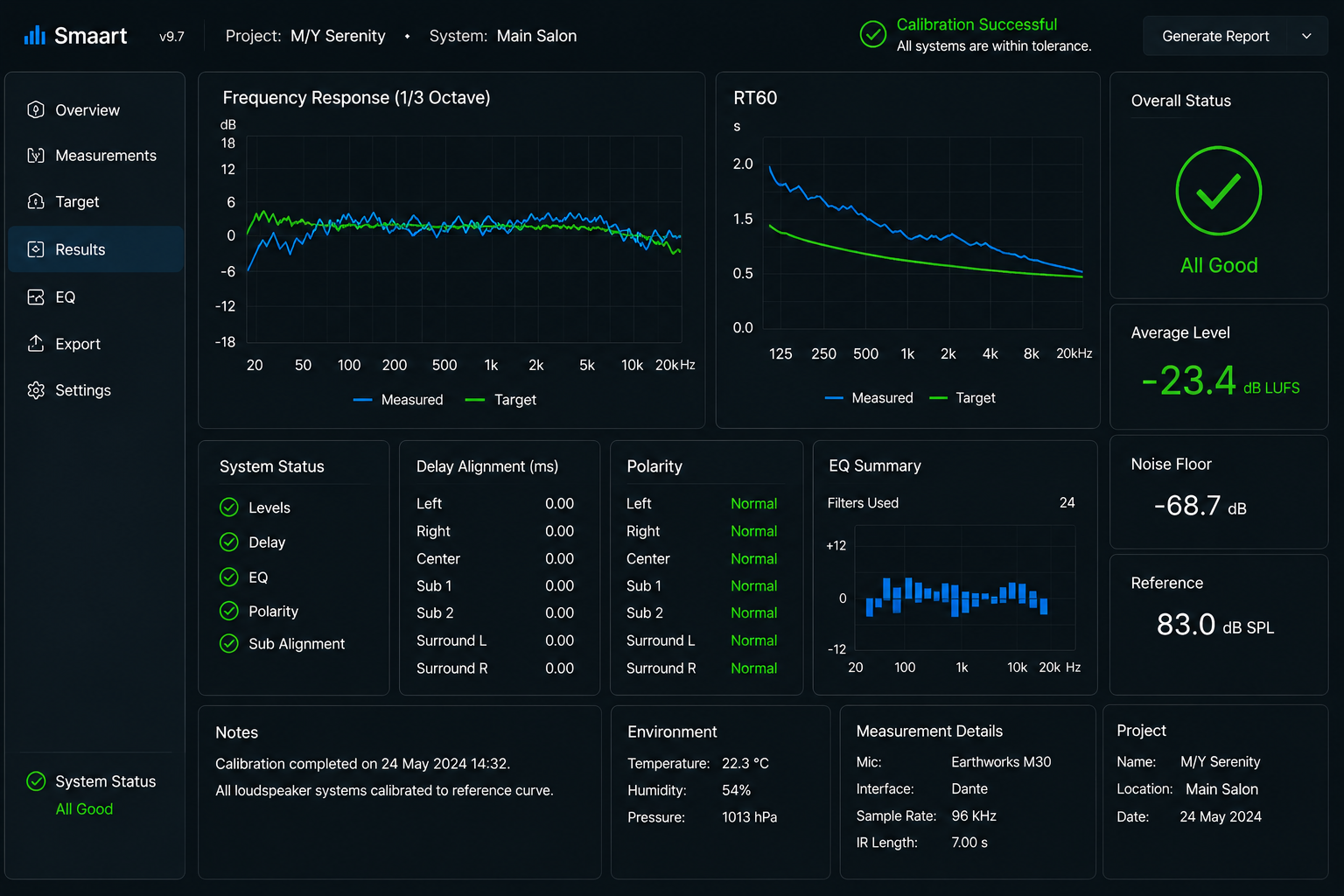
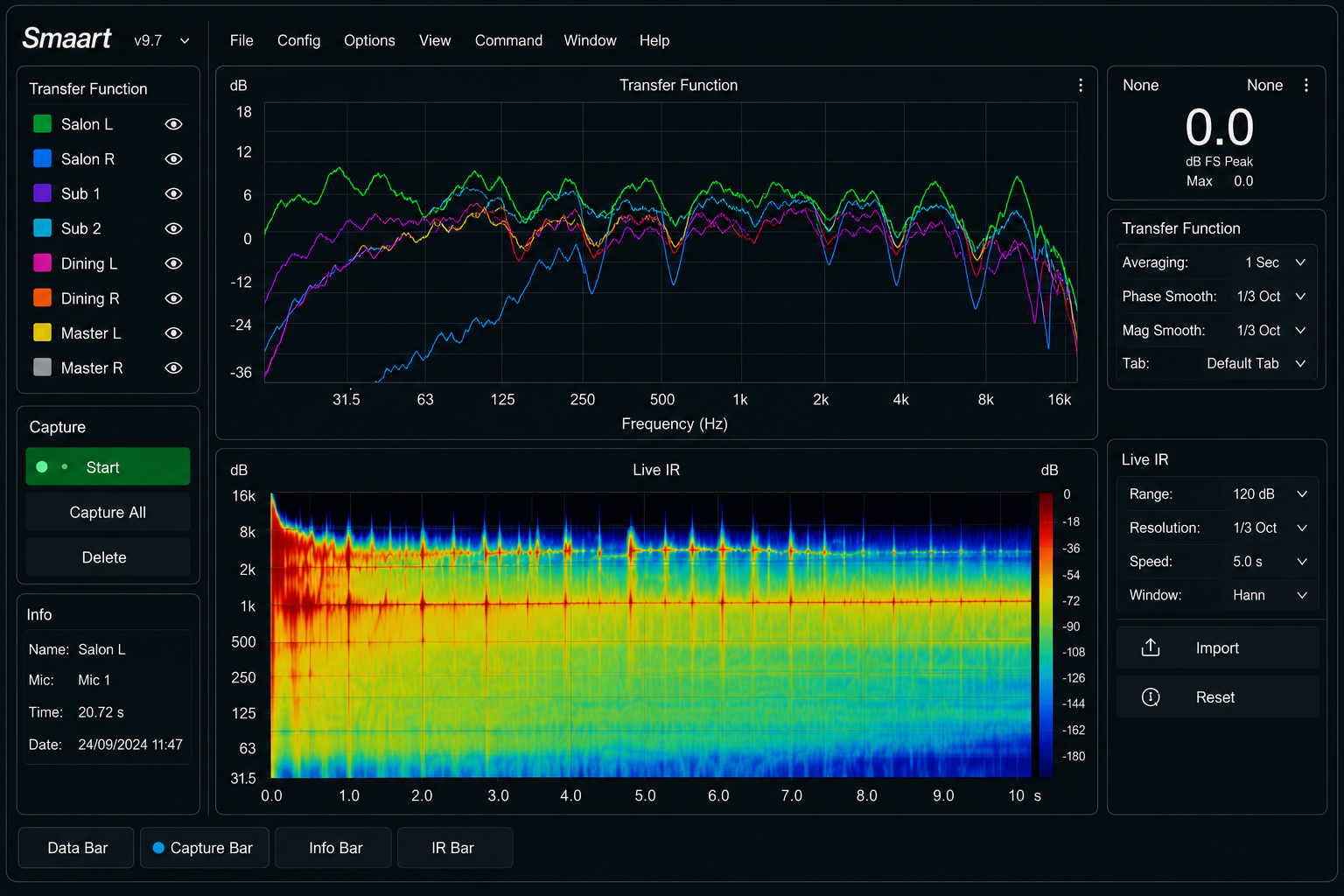
See the process
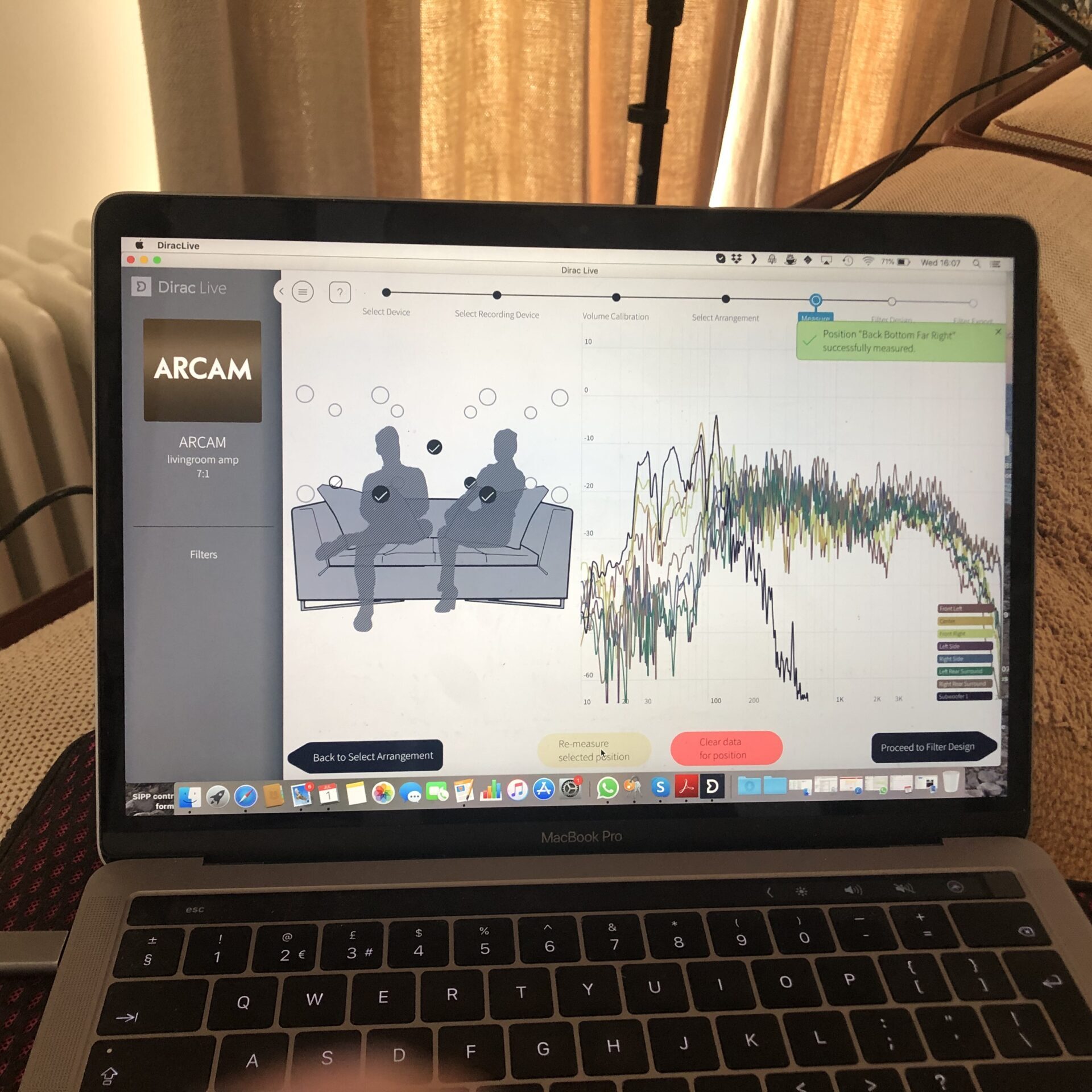
A single measurement only describes one point in the room. We capture a complete set of positions before designing filters, then verify the calibrated result in the same way.
The video shows one of approximately 30 measurements taken for a typical audio area.
The result
Phase-coherent soundstage
Uniform frequency response
Even bass distribution
Consistent volume throughout the listening area
Multiple seating positions optimised
DSP calibrated using measured data
Room mapping in practice
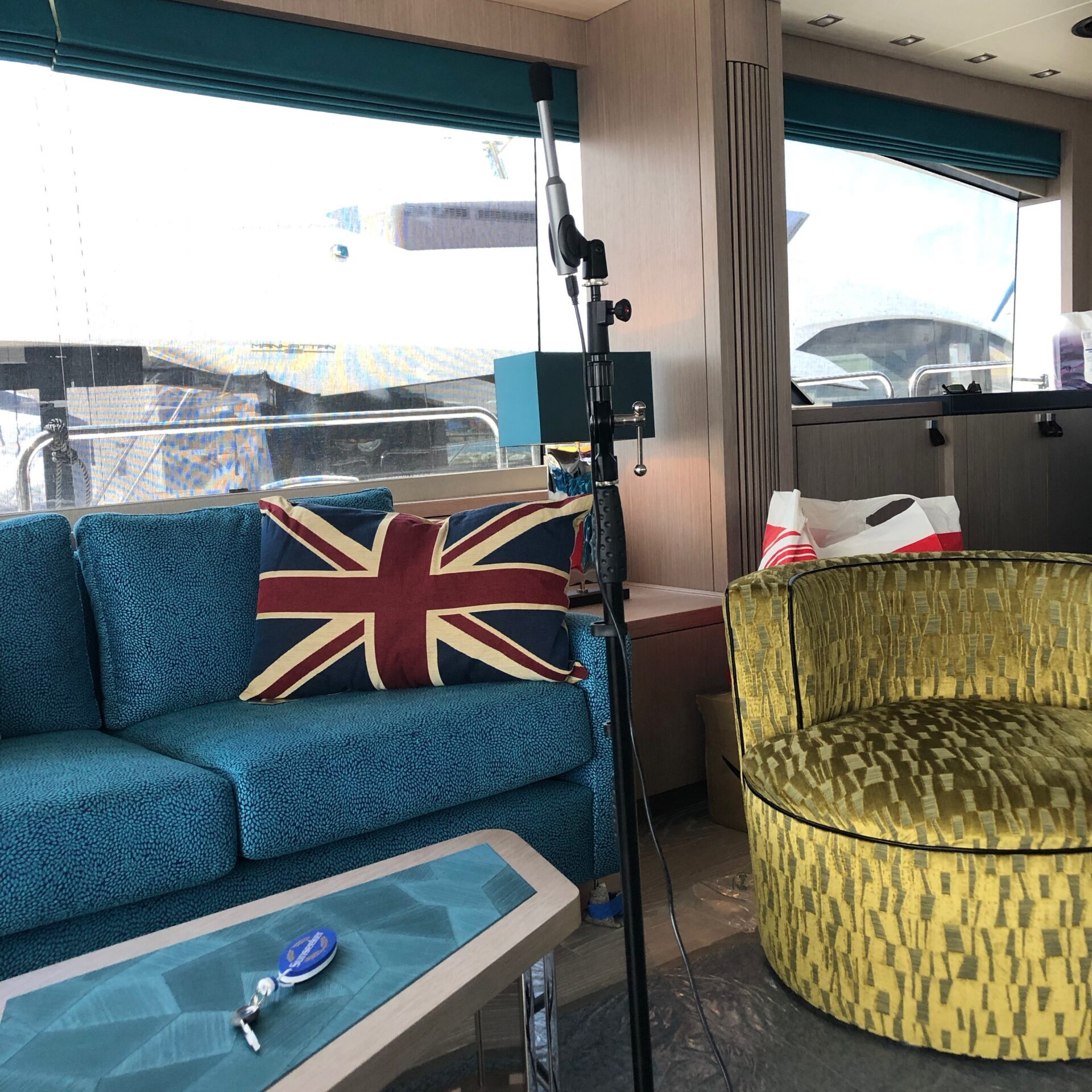
Calibration is carried out around the finished room and the way it will actually be used. Select an image to view it larger.